
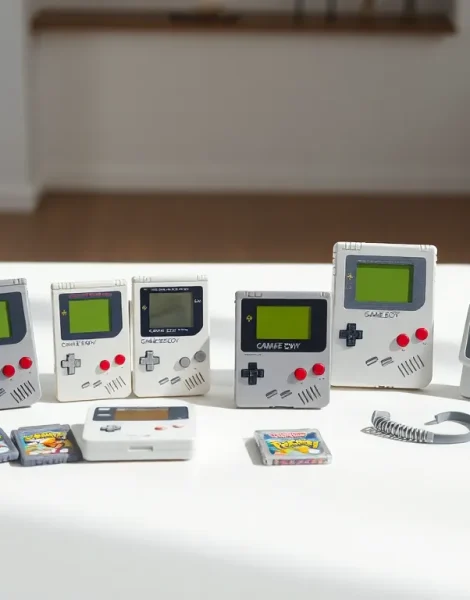
Game Boy examples span decades of gaming history, from the chunky gray original to the sleek Game Boy Advance SP. Nintendo’s handheld line sold over 200 million units worldwide and created an entire category of portable entertainment. These devices introduced millions of players to gaming on the go. They proved that powerful experiences didn’t require a TV or a living room. This article covers the consoles, games, and accessories that made the Game Boy family a cultural phenomenon. Whether someone grew up with Tetris in their pocket or discovered these classics later, these game boy examples represent some of gaming’s most important milestones.
Table of Contents
ToggleKey Takeaways
- The Game Boy family sold over 200 million units worldwide by prioritizing affordability, durability, and battery efficiency over raw specs.
- Iconic game boy examples like Tetris, Pokémon Red and Blue, and Link’s Awakening established templates that developers still follow today.
- The Game Boy Color (1998) and Game Boy Advance (2001) expanded handheld capabilities while maintaining backward compatibility with earlier cartridges.
- Accessories like link cables, the Game Boy Camera, and the Game Boy Player extended the platform beyond basic gaming into social and creative experiences.
- Modern handhelds like the Nintendo Switch and Steam Deck carry forward design principles that classic game boy examples established in 1989.
The Original Game Boy and Its Legacy
Nintendo released the original Game Boy in Japan on April 21, 1989. The device featured a green-tinted LCD screen, a directional pad, and two action buttons. It ran on four AA batteries and offered around 15 hours of gameplay.
The original Game Boy wasn’t the most powerful handheld of its era. Sega’s Game Gear and Atari’s Lynx both had color screens and better graphics. But Nintendo made smart choices. The Game Boy was affordable, durable, and battery-efficient. Kids could drop it, stuff it in backpacks, and play for hours without needing fresh batteries.
These game boy examples show how design priorities matter. Nintendo chose practicality over raw specs. The strategy worked. The original Game Boy and Game Boy Pocket sold nearly 119 million units combined.
The device’s signature look, that brick-like gray shell, became iconic. It appeared in movies, music videos, and art installations. Museums now display original Game Boys as cultural artifacts. The console didn’t just sell well. It changed how people thought about portable entertainment.
Classic Game Boy Games That Shaped the Industry
The best game boy examples aren’t just consoles, they’re the games that made those consoles worth owning.
Tetris
Tetris shipped with the Game Boy in most markets. This pairing was genius. The puzzle game appealed to players of all ages and skill levels. It became the best-selling Game Boy game ever, moving over 35 million copies. Tetris proved that simple gameplay could create lasting appeal.
Pokémon Red and Blue
Pokémon Red and Blue launched in 1996 in Japan and 1998 in North America. These games transformed the Game Boy from a successful product into a cultural phenomenon. Players caught, trained, and traded creatures using the Game Boy’s link cable. The franchise has since generated over $100 billion in revenue across games, cards, and merchandise.
The Legend of Zelda: Link’s Awakening
Link’s Awakening brought a full Zelda adventure to a handheld device. Critics praised its puzzles, story, and atmosphere. The game demonstrated that portable titles could match console experiences in depth and quality.
Super Mario Land Series
Super Mario Land launched alongside the Game Boy in 1989. Its sequel, Super Mario Land 2: 6 Golden Coins, introduced Wario as a villain. These games adapted Mario’s platforming formula for smaller screens and shorter play sessions.
These classic game boy examples established templates that developers still follow today.
Game Boy Color and Game Boy Advance Highlights
Nintendo didn’t stop with the original. The company released upgraded models that expanded what handheld gaming could do.
Game Boy Color
The Game Boy Color arrived in 1998. It featured a color screen and improved processing power while maintaining backward compatibility with original Game Boy cartridges. This backward compatibility gave the system an instant library of hundreds of games.
Standout Game Boy Color titles included Pokémon Gold and Silver, which added day/night cycles and 100 new creatures. The Legend of Zelda: Oracle of Ages and Oracle of Seasons offered interconnected adventures. These game boy examples pushed the hardware further than many expected.
Game Boy Advance
The Game Boy Advance launched in 2001. It featured a wider screen, shoulder buttons, and 32-bit graphics. The system could display visuals comparable to the Super Nintendo.
Key Game Boy Advance titles included Metroid Fusion, Final Fantasy Tactics Advance, and Fire Emblem. The Advance also received excellent ports of SNES classics like A Link to the Past and Super Mario World.
The Game Boy Advance SP, released in 2003, added a front-lit screen and clamshell design. Players could finally see their games in dark rooms without buying accessories. The SP remains one of the most beloved game boy examples among collectors.
Notable Accessories and Peripherals
The Game Boy family spawned an ecosystem of accessories. Some were practical. Others were delightfully weird.
Link Cables
Link cables connected two Game Boys for multiplayer gaming and trading. Pokémon made these cables essential. Trading creatures required a physical connection between devices. This design choice encouraged social interaction and helped build gaming communities.
Game Boy Camera and Printer
Nintendo released the Game Boy Camera in 1998. It captured low-resolution black-and-white photos. The Game Boy Printer let users print those photos on thermal paper. These accessories weren’t powerful, but they were fun. They turned the Game Boy into a creative tool.
Light Accessories
The original Game Boy had no backlight. Third-party companies sold clip-on lights, magnifiers with built-in illumination, and other solutions. These accessories were clunky but necessary for playing in cars or dark rooms.
Game Boy Player
The Game Boy Player attached to the Nintendo GameCube. It let users play Game Boy, Game Boy Color, and Game Boy Advance cartridges on a television. This accessory bridged portable and home gaming.
These game boy examples show how Nintendo and third parties extended the platform’s capabilities beyond basic gaming.
The Game Boy’s Influence on Modern Handheld Gaming
Modern handheld gaming owes a significant debt to the Game Boy line. Nintendo’s handhelds established principles that still guide portable device design.
The Nintendo DS continued the Game Boy’s legacy with dual screens and touch input. It sold over 154 million units. The Nintendo 3DS added glasses-free 3D effects. The Nintendo Switch, released in 2017, blends portable and home console gaming in ways the Game Boy hinted at decades earlier.
Third-party devices also carry Game Boy DNA. The Steam Deck and various retro handhelds appeal to players who grew up with portable Nintendo systems. Many of these devices run Game Boy emulators, letting new generations experience classic game boy examples.
Mobile gaming on smartphones follows patterns the Game Boy established. Quick sessions, pick-up-and-play mechanics, and battery efficiency all trace back to Nintendo’s design philosophy from 1989.
The indie game scene frequently references Game Boy aesthetics. Developers create new titles with four-shade green palettes and chiptune soundtracks. These stylistic choices signal nostalgia and pay tribute to the platform’s influence.
Game boy examples continue to shape how designers think about portable experiences.