
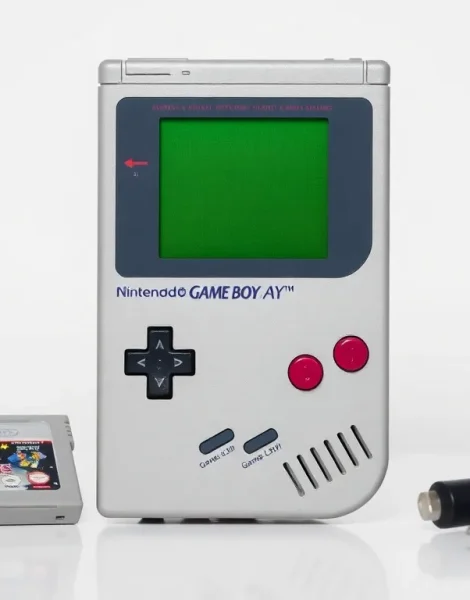
What is Game Boy? It’s the handheld gaming console that changed everything. Nintendo released this portable device in 1989, and it quickly became a cultural phenomenon. The Game Boy introduced millions of people to gaming on the go. It sold over 118 million units worldwide across its various iterations. This guide covers the Game Boy’s history, features, best games, and lasting impact on the gaming industry. Whether you’re a nostalgic fan or curious newcomer, here’s what made this little gray brick so revolutionary.
Table of Contents
ToggleKey Takeaways
- The Game Boy is Nintendo’s revolutionary handheld gaming console released in 1989, selling over 118 million units worldwide.
- Superior battery life (10-30 hours on four AA batteries) helped the Game Boy outsell more powerful competitors like Sega’s Game Gear.
- Iconic games like Tetris, Pokémon Red and Blue, and Super Mario Land defined the Game Boy experience and became global phenomena.
- The Game Boy line evolved through several versions, including the Game Boy Pocket, Color, Advance, and SP, before being succeeded by the Nintendo DS in 2004.
- The Game Boy established portable gaming as a legitimate market and influenced Nintendo’s design philosophy of prioritizing practicality over raw specs.
The History and Origin of the Game Boy
Nintendo engineer Gunpei Yokoi created the Game Boy. He previously designed the Game & Watch series, which proved that portable gaming had serious market potential. Yokoi believed a handheld console needed to be affordable, durable, and energy-efficient. These priorities shaped every design decision.
Nintendo launched the Game Boy in Japan on April 21, 1989. The North American release followed in July of that same year. The console arrived with a $89.99 price tag and included Tetris as a pack-in game. That bundling decision proved brilliant. Tetris appealed to casual players and hardcore gamers alike, broadening the Game Boy’s audience significantly.
Competitors like Sega’s Game Gear and Atari’s Lynx offered color screens and more processing power. Yet the Game Boy outsold them all. Why? Battery life. The Game Boy ran for 10-30 hours on four AA batteries. The Game Gear drained six batteries in about 3-5 hours. Parents and kids noticed that difference immediately.
By 1990, the Game Boy had become a global success. It dominated handheld gaming for over a decade. Nintendo’s focus on practical features over flashy specs created a product people actually wanted to use.
Key Features and Hardware Specifications
The original Game Boy featured modest but effective hardware. Its screen displayed four shades of green on a 2.6-inch dot matrix display. Resolution sat at 160 x 144 pixels. Not impressive by modern standards, but perfectly functional for the games of its era.
The processor was a Sharp LR35902 running at 4.19 MHz. This custom chip combined elements of the Intel 8080 and Zilog Z80. It provided enough power for smooth gameplay without draining batteries quickly.
Memory included 8 KB of RAM and 8 KB of video RAM. Game cartridges held between 256 KB and 8 MB of data. These cartridges plugged into the top of the unit and contained their own battery backup for saving game progress.
The Game Boy weighed approximately 220 grams. Its dimensions measured roughly 90 mm wide, 148 mm tall, and 32 mm deep. The device fit comfortably in hands of all sizes. Its controls included a directional pad, two action buttons (A and B), and Start and Select buttons.
Sound came from a mono speaker on the front. A headphone jack allowed for stereo audio output. The Game Boy could produce four channels of sound simultaneously, which composers used creatively to craft memorable chiptune soundtracks.
A link cable port enabled multiplayer gaming between two Game Boy units. This feature became essential for games like Pokémon, where trading creatures required connecting two consoles.
Most Popular Game Boy Games
The Game Boy library included over 1,000 titles. Several became iconic franchises that continue today.
Tetris shipped with the original Game Boy and sold over 35 million copies. Its simple puzzle gameplay appealed to everyone from children to business executives. Many credit Tetris with proving that video games weren’t just for kids.
Pokémon Red and Blue launched in 1996 in Japan and 1998 in North America. These games became a phenomenon. Players caught, trained, and battled pocket monsters. The trading mechanic encouraged social interaction and drove Game Boy sales among a new generation.
Super Mario Land brought Nintendo’s mascot to portable gaming. It sold over 18 million copies and showed that console-quality platforming could work on handheld hardware.
The Legend of Zelda: Link’s Awakening delivered a full adventure game on the Game Boy. Critics praised its story, puzzles, and exploration. It demonstrated the platform’s capability for deeper gaming experiences.
Kirby’s Dream Land introduced the pink puffball character. Its accessible difficulty made it perfect for younger players, while its charm appealed to all ages.
Other notable titles included Metroid II, Donkey Kong, Wario Land, and Dr. Mario. The Game Boy’s library offered something for every taste and play style.
The Evolution of the Game Boy Line
Nintendo released several Game Boy variants over the years. Each iteration improved upon the original design.
The Game Boy Pocket arrived in 1996. It featured a slimmer design and sharper screen. The display showed true black-and-white graphics instead of the green tint. It also required only two AAA batteries.
The Game Boy Color launched in 1998. It added a color display while maintaining backward compatibility with original Game Boy cartridges. New games took advantage of the 56-color on-screen palette. Popular Color exclusives included Pokémon Gold and Silver.
The Game Boy Advance debuted in 2001. It represented a significant hardware upgrade. The 32-bit processor enabled graphics comparable to the Super Nintendo. The wider horizontal screen format changed game design possibilities. Titles like Metroid Fusion, Fire Emblem, and Advance Wars showcased its capabilities.
The Game Boy Advance SP followed in 2003. It introduced a clamshell design with a front-lit (later backlit) screen. Players could finally see their games clearly in any lighting condition. A rechargeable battery replaced disposable ones.
The Game Boy Micro released in 2005 as a compact alternative. It featured a small, bright backlit screen but dropped backward compatibility with older Game Boy games.
Nintendo discontinued the Game Boy line after introducing the Nintendo DS in 2004. The DS featured dual screens and touch input, marking a new direction for portable gaming.
The Game Boy’s Lasting Legacy
The Game Boy established portable gaming as a legitimate market. Before its release, handheld devices were simple toys. Nintendo proved that people would pay for quality gaming experiences they could take anywhere.
The console’s success influenced Nintendo’s design philosophy for decades. Prioritizing battery life, durability, and affordability over raw specs became a company trademark. This approach appeared again with the Nintendo DS and Nintendo Switch.
The Game Boy also pioneered social gaming features. The link cable created local multiplayer experiences years before online gaming became standard. Pokémon’s trading system showed how hardware limitations could inspire creative game design.
Collectors today prize original Game Boy hardware and cartridges. Retro gaming has grown into a substantial hobby, with rare titles fetching hundreds of dollars. The Game Boy remains playable and enjoyable, which speaks to its solid design.
Modern indie developers still create new Game Boy games. Homebrew communities have kept the platform alive. Some musicians use actual Game Boy hardware to produce chiptune music, appreciating its distinctive sound.
The Game Boy’s influence extends beyond gaming. It shaped how an entire generation experienced portable entertainment. Smartphones now fill the role of portable gaming devices for many people, but they owe a debt to the chunky gray handheld that started it all.